Pacific leaders discuss fuel crisis, inflation
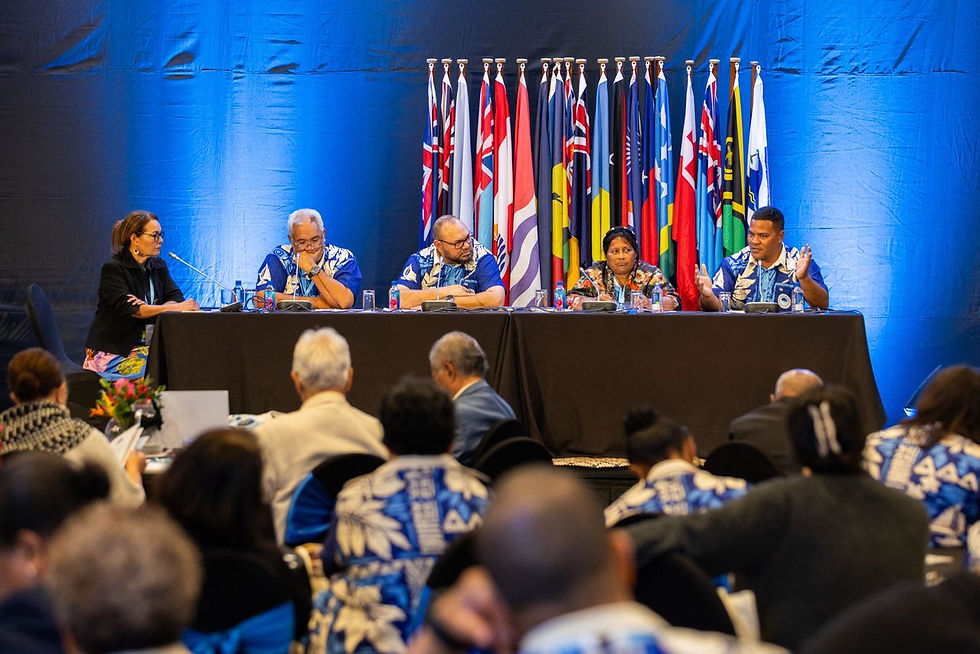
Papua New Guinea's Minister for Finance Thomas Opa has highlighted that the global fuel crisis - created by the closure of the Strait of Hormuz - has affected economic security across the Pacific region.
Speaking at a Pacific Peace and Security Dialogue meeting in Suva, Fiji on June 16, Mr Opa said in PNG, those who reside on the country's most remote islands were particularly impacted.
"Some have to travel a long distance from the mainland to some of the scattered islands across PNG," he said.
"The increase in fuel prices has really affected not only the people on the mainland that will now buy more fuel at the bowser, it also affects business, and if the business is not growing, they cannot make profit, they cannot employ people - so it has broader implications on the wellbeing of people. This is a concern that affects Papua New Guinea."
Minister Opa said while PNG had instated a fuel subsidy to alleviate pressure, it was not sustainable long term.
He noted that as a small producer of oil and gas, PNG was also looking at ways to contribute to smaller Pacific Island states.
"Our Prime Minister in the recent Pacific Energy and Transport meeting in Port Moresby indicated Papua New Guinea's intention to build smaller refineries to not only support fuel security in storage tanks and fuel security in our country, but also how we can contribute to our smaller Pacific island countries," he said.
The fuel crisis, inflation and the rising cost of living have underscored the importance of national and regional cooperation to build economic resilience.
The leaders on economic security panel also featured Cook Islands' Minister for Foreign Affairs, Tingika Elikana; Nauru's Minister for Women's and Social Development Affairs, the Charmaine Scotty; and Tuvalu's Minister for Transport, Energy, Communication and Innovation, the Simon Kofe.
Minister Kofe said the fuel crisis was "a wake-up call" when it comes to transitioning to low or zero carbon.
"We do a lot of advocacy on the international stage, but what are we doing on the local level to achieve that transition? It's no longer just an environmental issue, it's now become a security issue for us."
Minister Elikana said the Cook Islands' economy had grown thanks to 15 years of unbroken political stability, with tourism being the nation's most prominent income stream.

Story byb Sam Vulum


Comments